7 Strategic Advantages
Of Having a Dedicated Telehealth Video Platform
February 20, 2026
Of Having a Dedicated Telehealth Video Platform
February 20, 2026
A dedicated telehealth video platform is a specialized, secure video system made just for healthcare. Unlike regular video apps , it connects directly to your patient records, follows all privacy laws (HIPAA), and includes special tools like virtual waiting rooms to make online visits smoother and safer for everyone.
The days of using “good enough” video tools are over. When the pandemic started, doctors used whatever worked—Skype, WhatsApp, or FaceTime. But now, those tools are causing problems.
If you are still sending patients a random meeting link, you are missing out on these seven strategic advantages.
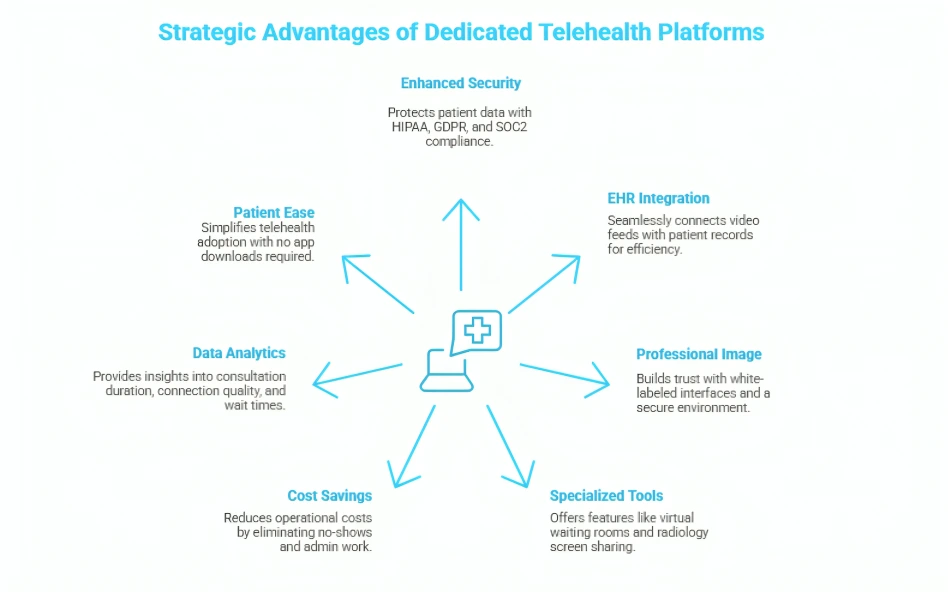
The most critical reason to switch is the protection of patient data. General-purpose video apps often lack the specific encryption standards required for Protected Health Information (PHI). In contrast, a dedicated platform is built from the ground up to be HIPAA, GDPR, and SOC2 compliant.
Compliance isn’t just about checking a box; it’s about avoiding catastrophic financial penalties. A dedicated provider will sign a Business Associate Agreement (BAA) with you a legal necessity that many free or generic tools refuse to offer.
When evaluating vendors, you must scrutinize the security features to check before implementation. This isn’t just about encryption; it’s about access controls, audit logs, and ensuring patient data never resides on a server where it shouldn’t be.
Strategic Insight: A breach doesn’t just cost money; it costs trust. According to the HIPAA Journal, hacking incidents in healthcare have surged, making specialized security layers non-negotiable.
Efficiency in healthcare is measured in minutes. Generic video tools often force providers into a “swivel chair” workflow: opening a video app on one screen while manually typing notes into an Electronic Health Record (EHR) on another. This disconnect increases the risk of errors and reduces the number of patients a provider can see.
A dedicated platform integrates the video feed inside your patient records system via API.
Need help streamlining your clinical workflow? [Reach out to our experts to discuss custom integration].
First impressions matter. When a patient clicks a link that requires them to download a third-party app or creates an account with a social media giant, it erodes professional trust.
A dedicated platform allows for White Labeling. You can brand the interface with your hospital or clinic’s logo, colors, and domain. This continuity reassures patients they are in a safe medical environment, not a casual video chat.
To ensure you maintain this level of trust, it is critical to know how to choose secure video conferencing that aligns with your brand’s reputation. If your “branded” platform crashes or leaks data, the damage to your brand is double.
Generic meeting tools are designed for boardrooms, not exam rooms. They lack the nuanced features required for clinical triage and patient management. A dedicated telehealth solution offers:
While dedicated platforms may seem like a premium investment, they often reduce operational costs in the long run by eliminating no-shows and reducing administrative overhead.
Generic tools often come with hidden costs—licensing fees for features you don’t need, or IT hours spent troubleshooting. By consolidating your tools, you can save big on your video conferencing bills while actually gaining features relevant to healthcare.
Skip the manual work and cost calculations. [Try our tool for free to see your potential savings].
You cannot improve what you cannot measure. Dedicated platforms provide granular analytics that generic tools cannot match:
The biggest barrier to telehealth adoption for patients, especially the elderly, is technology friction. Requiring a patient to download an app or update software results in frustration and cancelled visits.
Best-in-class dedicated platforms run in the browser (WebRTC).
| Feature | Dedicated Telehealth Platform | Generic Video App |
|---|---|---|
| HIPAA Compliance | Built-in (BAA included standard) | Often requires Enterprise tier |
| EHR Integration | Native / API-first | Requires 3rd party middleware |
| Workflow | Virtual Waiting Room, Triage | General Lobby (Manual admission) |
| Branding | Full White Labeling | Vendor Branding |
| Data Privacy | No data mining | Varies by privacy policy |
It is a software solution specifically engineered for healthcare providers to conduct remote patient visits securely. It combines video conferencing with clinical tools like EHR integration and virtual waiting rooms.
HIPAA regulations mandate that any technology transmitting Protected Health Information (PHI) must ensure confidentiality. Using non-compliant tools can lead to massive federal fines.
Look for three non-negotiables: a signed Business Associate Agreement (BAA), API capabilities for integration, and browser-based access (no downloads) for patients.
Not necessarily. When you factor in the efficiency gains and reduced no-shows, a dedicated solution often delivers a higher Return on Investment (ROI).
Have questions or need assistance? Fill out the form, and we'll get back to you right away!
Usually in 24 hours on working days.