What is the Role of Virtual Events
In Modern Business Communication?
November 20, 2025
In Modern Business Communication?
November 20, 2025
Business communication has changed forever. In the past, working together meant everyone had to be in the same room. Today, business relies heavily on digital tools to get things done.
At first, companies used virtual events only because they had to due to health rules during the pandemic. But as we move through 2025, these events are here to stay. They are no longer just a temporary fix. They have grown into a specific, valuable business tool that saves money and helps operations run smoothly.
This shift has completely reshaped how companies connect. This guide will explore the important role virtual events play in the modern business communications.
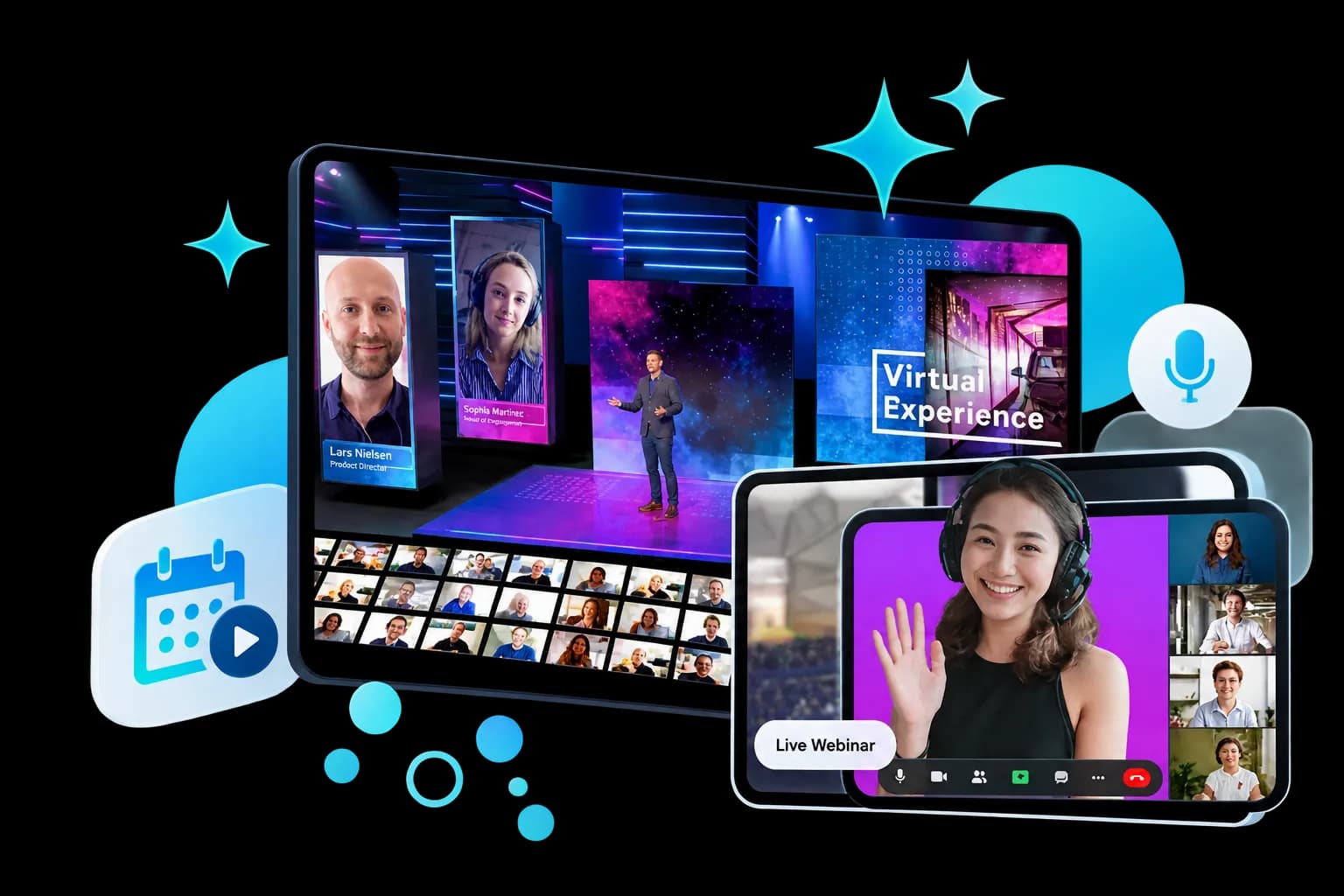
A virtual event is simply a gathering that happens online. Instead of driving to a convention center or flying to a hotel, people meet on the internet through their computers or phones.
Most people think of this as a regular video call. But it is actually quite different. A simple video call is usually just a conversation between a few people. A virtual event is much bigger and more organized.
Think of it like a digital conference. It has a set schedule. It has specific speakers who are there to teach or share ideas. It is a structured experience designed to help a large group of people connect.
The main point of holding these events is to make it easier and cheaper for people to connect.
When a business hosts a virtual event, it removes the biggest barrier to meeting, which is the need to travel. This allows people from all over the world to join the conversation without buying a flight ticket or booking a hotel room. Because of this, the cost to run these events drops dramatically. This huge saving allows companies to take that extra money and spend it on other important things.
Beyond just saving money, it makes creating an event incredibly simple because organizers do not have to worry about managing physical logistics like setting up booths, printing thousands of paper brochures, or worrying about physical security for events with a large crowd. It also removes the friction for the attendees as they can join from the comfort of their own home without the stress of packing bags, fighting traffic, or losing days of work just to travel to a meeting.
Ultimately, virtual events allow businesses to gather more people for a fraction of the price while removing almost all the headaches associated with traditional conferences.
Virtual events have definitely made business communication much faster and more efficient. They allow leaders to speak to thousands of employees at the exact same time. This ensures everyone hears the same message instantly without waiting for it to trickle down. Teams can jump on a call and solve problems right away without waiting weeks to travel to a physical meeting. This speed helps businesses make decisions much faster than before.
However, there is a downside to this efficiency. It is often harder to connect with people on a human level through a computer screen. Many people find it difficult to read body language or understand social cues when they are not in the same room. It is also harder to build deep trust with a new partner without shaking their hand or sharing a meal. Because people join from home, they are often distracted or doing other things while listening. So, virtual events are excellent for sharing facts and updates, but they are not as good for building close relationships or team spirit.
Virtual events flatten the hierarchy in a company. In the past, a CEO might only speak to the senior managers in the main office. Now, they can speak to every single employee at the exact same time. It does not matter if the employee is a junior worker or a top boss. Everyone gets the same information at the same moment. This makes the organization more open and transparent.
These events have changed how we handle time. Before this technology, if you missed a meeting, you missed the information forever. Now, virtual events are almost always recorded. This creates a library of content that you can watch whenever you are ready. You do not have to wake up in the middle of the night for a meeting just because you are in a different time zone.
Virtual event platforms give companies much better information than a physical meeting. In a real room, you cannot tell if people are actually listening or just daydreaming. Online, virtual event technology measures exactly who is paying attention. You can see if they answered a poll or downloaded a file. This helps businesses understand if their audience is actually interested in what they are saying.
Moving communication online makes business move much faster. Teams do not have to wait weeks to plan a trip just to solve a problem. They can jump on a call and make a decision immediately. This speed allows companies to fix issues right when they happen. It removes the long delays that used to slow down important projects.
The most obvious benefit is saving a lot of money. Running corporate virtual events usually costs about 75% less than hosting an in-person one. Companies do not have to pay for expensive hotels, airplane tickets, or catering. This allows the business to use that saved budget for better technology or marketing instead.
When a business leader decides between hosting an event online or in person, it usually comes down to one big question: Which one is worth the money?
But the fact is Virtual events and in-person events are good at very different things. To understand the value of these events, we have to look at what you actually get in return.
1. The Case for Virtual Events: If your goal is to save money and reach thousands of people, virtual events are the clear winner.
2. The Case for In-Person Events: High Trust and Deep Relationships However, saving money is not the only goal. Sometimes, you need to build deep trust, and this is where in-person events win.
So, which one is right for you?
To choose the right virtual event, you must match the specific technology to the exact goal you want to achieve. Here is a simple breakdown of the different types to help you decide.
How to Make the Final Decision?
When you are trying to pick between these options, you should look at your specific goal. If you need to build deep trust, negotiate a complex deal, or bond emotionally with a team, you should probably meet in person. But if your goal is to educate people, give updates, or reach a massive audience quickly, a virtual event is the superior choice because it is faster and easier for everyone involved.
In modern business, teams are often split between home and the office. The main role of a virtual event for teams is to act as the central meeting place where everyone is equal. It ensures that the person working from a kitchen table in another country has the same access to information and leadership as the person sitting in the headquarters. It is the tool that keeps a scattered team feeling like one single unit.
Virtual events have replaced the need to fly trainers around the world. Their role is to deliver knowledge immediately. If a company is running digital transformation events to launch a new product or change a policy, they can host a virtual event to teach thousands of employees the next day. This role creates a smarter, faster workforce because they don’t have to wait weeks for a scheduled in-person workshop to learn new skills.
When travel is impossible due to weather, health crises, or budget cuts, business often stops. The role of virtual events is to be the backup plan that keeps things running. It ensures that critical client meetings, annual conferences, and sales pitches can happen no matter what is going on in the physical world. It protects the business from stopping.
Virtual events act as a powerful tool to find new customers. When you host a helpful webinar or an online product demo, people must register with their email addresses to attend. This instantly gives your sales team a list of people who are already interested in what you offer. It automates the hard work of finding potential buyers and brings them directly to your digital doorstep.
When employees work from home, they can easily feel lonely or disconnected from the company’s mission. The role of virtual events is to bind the team together emotionally. through virtual team events for work like town halls, awards ceremonies, or casual coffee chats, these events replace the office “water cooler.” They remind every employee that they are part of a real community, not just a name on a screen.
Virtual events are no longer just a backup plan for when we cannot meet in person. They have proven to be a superior way to share information, find new customers, and save a lot of money. However, it is important to remember that they cannot fully replace the human connection needed to build deep trust. Success in the future is not about choosing one side over the other. The best companies in 2025 will not choose between virtual and physical events. Instead, they will use both as tools, picking the right one for the specific job they need to do.
If you are looking for a video conference platform that allows you to host virtual events without technical headaches, you should consider inMeet. Throughout this guide, we learned that the biggest barrier to a successful event is friction. inMeet provides virtual event solutions that solve this problem completely, making communication easy and accessible.
Here’s the glimpse of how inMeet improves your virtual events:
A virtual event is an online gathering where people meet over the internet instead of in a physical building. It is not just a simple video call, but a structured experience designed to share ideas and build connections with a large audience.
These events make communication faster by allowing teams to jump on a call and solve problems immediately without waiting to travel. They also ensure everyone hears the same message at the exact same time, which helps leaders speak directly to all employees regardless of their rank.
The main benefits are saving a lot of money on travel and venue costs while allowing people to join from anywhere in the world. Platforms also provide better data to show who is paying attention, which is information you cannot get in a physical room.
These events allow global teams to access recorded content when they are ready, so they do not have to wake up at odd hours for a meeting. This flexibility ensures that remote workers feel included and have the same access to information as those in the main office.
You need a reliable video platform that lets people join easily without downloading difficult software. It is also important to use tools like live polls and Artificial Intelligence (AI) that can translate speech or summarize the meeting to keep everyone engaged.
Virtual events use interactive tools like polls and Q&A sessions to let every employee speak up instead of just listening. This active involvement helps employees feel safer asking questions and has been shown to increase productivity.
Yes, they are secure if organizers use proper protections like encryption to keep conversations private. Features like digital waiting rooms and unique passwords also help prevent strangers or hackers from interrupting the meeting.
Businesses use software to track exactly how long attendees watched and if they interacted with the content. This data, often called “digital body language,” tells the company clearly if the audience was interested and engaged.
Have questions or need assistance? Fill out the form, and we'll get back to you right away!
Usually in 24 hours on working days.